
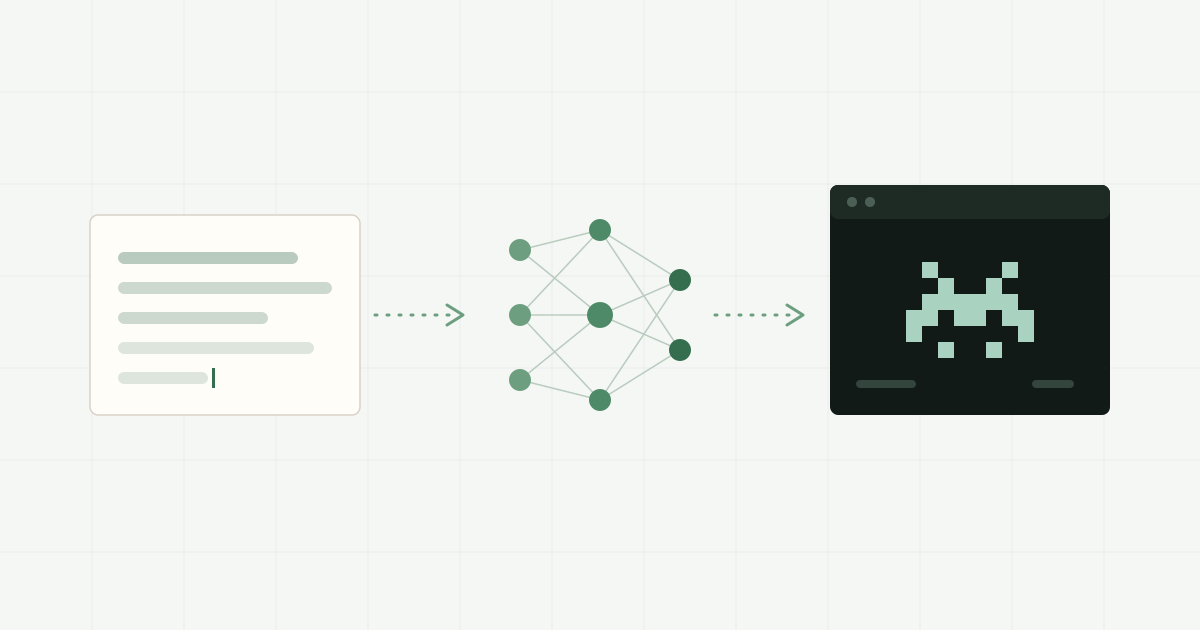
AI-created games are real: a neural network writes playable code from a text description while a human sets the task and checks the result. A second, more radical path exists too. Models like Google DeepMind's Genie 3 generate the world frame by frame, with no game engine and no game code at all.
I run GameFoundry, a marketplace where people bring these games every week, and I see both sides: beginners thrilled to ship their first arcade game in an evening, and professional developers who remain skeptical. Both camps have numbers behind them, and I'll show you both.
Vibe coding: a game as a conversation
OpenAI co-founder Andrej Karpathy coined "vibe coding" in February 2025: you describe what you want in plain language, accept the AI's suggestions without studying every line, and steer with follow-up prompts. By November, Collins Dictionary had named "vibe coding" its word of the year.
The best-known example in games is fly.pieter.com, a browser flight simulator. Indie developer Pieter Levels started it with a single prompt, "make a 3D flying game in the browser," sold ad space inside the game world, and by his own account hit a $1 million annual revenue rate in 17 days. The hype faded and revenue dropped, but the precedent stands: one person with no team built and monetized a game by talking to a neural network.
For simple genres this approach works today. HTML5 arcades, puzzles, runners and clickers come together in hours. A noticeable share of the games in the GameFoundry catalog were made exactly this way.
Neural networks that generate the whole game
A parallel research track goes further. Here the AI writes nothing; it becomes the engine.
In August 2024, Google researchers showed GameNGen, a diffusion model that simulates DOOM in real time on a single TPU, predicting each next frame from the player's actions. There is no game code inside. In short clips, human raters struggled to tell the simulation from the real DOOM.
A year later, in August 2025, Google DeepMind introduced Genie 3, a world model that generates an interactive 3D environment from a text prompt at 720p and 24 frames per second. You can walk around it for several minutes, the world stays physically consistent, and you add events by typing them: "make it rain." In January 2026 the technology reached Google AI Ultra subscribers in the US as Project Genie.
Commercial games built this way are still far off. Sessions last minutes rather than dozens of hours, generation is expensive, and control is limited. But the road from GameNGen to Genie 3 took one year.
What developers themselves think
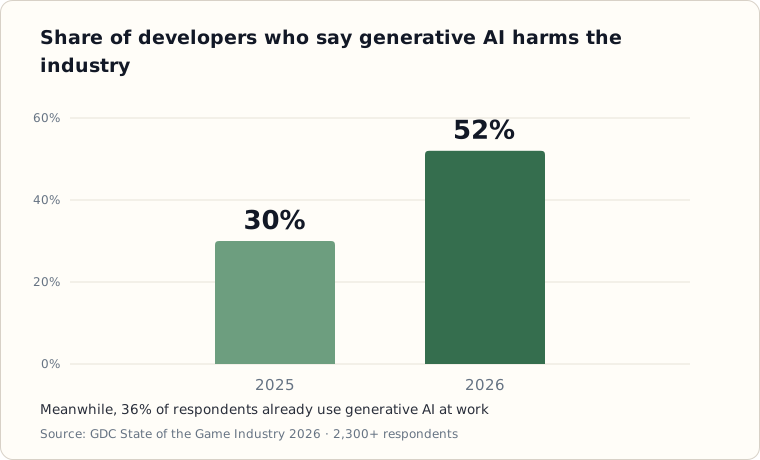
The industry met this wave coldly. The GDC State of the Game Industry 2026 survey, with over 2,300 professionals responding, found a split picture: 36% already use generative AI at work, while 52% believe it harms the industry. A year earlier the negative share was 30%.
The complaints are specific. Artists point to models trained on their work without consent, programmers to generated code that costs more to maintain than to write, studios to a flood of near-identical games in the stores. Only 7% of respondents expect a positive effect.
My view from the middle of this argument: AI removed the barrier to entry, but the need for craft never left. A neural network now helps you make a bad game faster, and it still won't invent an interesting mechanic, good balance or a sense of humor for you. In GameFoundry's weekly contests players decide the outcome by voting, and the games that win are the ones that hook people, whatever tools made them.
Your first AI game in five steps
This is the path I recommend to newcomers on our platform.
1. Pick a simple genre. An arcade game, a puzzle, a runner. One mechanic, one goal. A Flappy Bird clone with your own twist beats an unfinished RPG.
2. Write the prompt like a spec. Skip "make a cool game" and write "a single-page HTML5 game: a ball jumps between platforms, spacebar to jump, score grows with each platform, everything in one index.html with no external libraries." The one-file constraint simplifies both debugging and publishing.
3. Iterate in small steps. Ask for one change at a time: jump physics, background color, sound. Open the game in a browser after every step and test it by hand. If something breaks, ask for a rollback.
4. Put it in front of real people. Three friends will find more problems than ten re-reads of the code. Controls, the difficulty of the first thirty seconds, and a clear goal are the three things that most often kill interest.
5. Publish and collect feedback. Upload the build to GameFoundry via the upload page: a ZIP with index.html inside, a couple of screenshots, a description. The game enters the weekly contest with a 100 USDT prize pool, and player reviews will tell you what to fix next. Past winners are listed in the public payout table.
FAQ
Can I create a game with AI without knowing how to code?
Yes, a browser game in a simple genre is realistic. Knowing basics like "file," "variable" and "browser console" speeds things up, but you can start from zero: the AI explains its steps if you ask.
Which AI makes entire games, without code?
Genie 3 by Google DeepMind generates playable 3D worlds from a text description; since January 2026 it has been available in the US to Google AI Ultra subscribers as Project Genie. It remains research technology: sessions are short, control is limited, and it is not yet suited to shipping a commercial game.
Who owns a game created with AI?
It depends on your jurisdiction and on the terms of the specific tool. Most popular AI assistants permit commercial use of generated code, and the human creative contribution, such as story, art and level design, is protected as usual. Read your tool's license before publishing; this is not legal advice.
Will AI replace game developers?
The GDC 2026 survey points the other way: skepticism grew from 30% to 52% in a year, and no mass replacement of teams has happened. AI takes over the routine work: prototypes, boilerplate code, draft assets. Design, balance and taste stay human.
How much does it cost to make an AI game?
The minimal setup is about $20 a month for an AI assistant subscription. A browser game needs no engine and no servers: one HTML file runs everywhere. Publishing on GameFoundry is free.
Maksim Ilin is the founder of GameFoundry, a marketplace where indie games compete for weekly prizes decided by player votes. I write about how AI is changing game creation, drawing on examples from our own catalog.